An Albanian citizen’s open letter to the EU
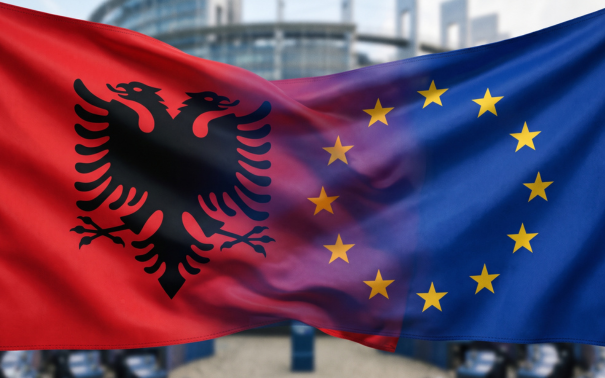
This is an Albanian citizen, tired of the EU patting its political leader on the back, a leader who brings geopolitical stability to the EU but nothing to its own country. This is a letter from a society that no longer sees the EU as the bearer of values, when it turns a deaf ear to demands for transparency and accountability in one of its frontrunner candidates.
I was a dreamer; I studied the EU’s foreign policy at the College of Europe in Bruges and came back to my home country. I idealized the EU and the vision its founding fathers and mothers had for the Union.
Years passed, and my idealism began to fade with Albania’s slow progress and political stagnation among EU capitals on enlargement policy (Juncker’s famous quote about no membership during his mandate still resonates with me). But my countrymen and women were the EU’s strongest supporters. 93% (in 2019) of the population supported EU integration of Albania, a statistic any candidate country or even member state would envy. And we proudly wore the badge of honour, as Albanian citizens believed they were joining a Union of values, where human rights are respected, democracy works, and economic benefits are shared across society.
Then the war in Ukraine hit. This time, the badge of honour was our 100% alignment with CFSP and CSDP[1]. Our PM Rama was warmly welcomed and patted on the shoulder for being a good pupil. We were cherished for being stable, compared to our troubled Western Balkans neighbours. Cherished for still being a firm supporter of EU integration, despite ongoing enlargement fatigue within and outside EU borders.
Then we were offered entry into the highway of EU integration. Not because we were doing better than in the last couple of years, but because, in front of an external threat like Russia, the EU needed a geopolitical success story, preferably in its backyard. We were granted candidate country status in 2014, and negotiations opened in 2020. Within two years (2024-2026), we opened all negotiation clusters and had interim closure of four chapters. For comparison, Montenegro, the best student in the class of EU integration, was granted candidate status in 2010, opened negotiations in 2012, opened all 33 chapters for negotiations in 2020, and has closed 21 chapters to date.
Brussels took pride in supporting justice reform in Albania and uprooting corruption in the justice system, a reform it aimed to replicate in other candidate countries. What Brussels and other EU capitals failed to see was that while justice system independence improved, executive and legislative power at the central and local levels was concentrated in one hand: the Socialist Party (SP). With the SP’s third mandate, there were no more reforms; there were only electoral calculations, a network of corrupt officials, concentration of power in the prime minister’s office, erosion of institutional independence, and no separation of powers.
The famous cluster of “Fundamentals” that any student of EU integration will tell you by heart, the first one to open and the last to be closed, does not have a broad EU acquis to be based on. Instead, it is evaluated on countries’ democratic practice, the rule of law, and human rights. Now in his fourth mandate, PM Rama has learned the language of Brussels; he has proven credible in delivering the success story and has been recognized as a reliable interlocutor. In the meantime, OSCE ODHIR delivered the most critical election report for the country since the civil war of 1997; the Special Prosecutor’s Office arrested several key figures of SP, including former ministers, while investigating the mayor of Tirana, former deputy prime minister, and high officials like the former head of the State Intelligence Agency. SP has not resigned or taken any political responsibility.
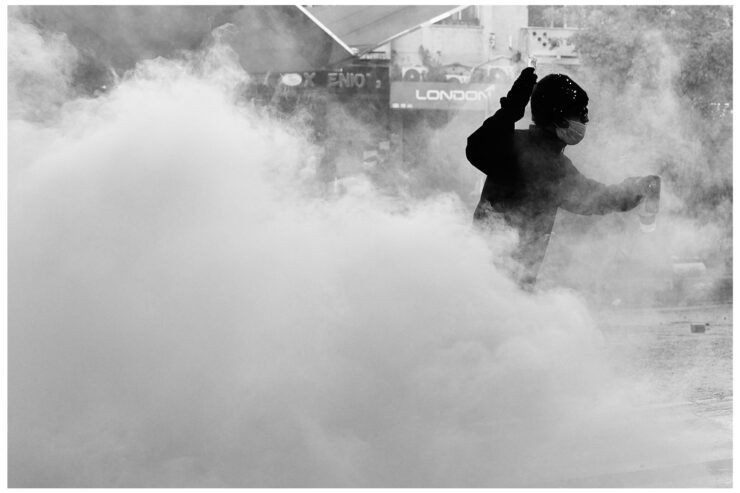
Citizen discontent grew, with the tipping point being the Flamingo protest, sparked by plans to build a resort in a protected area. Environmentalists met the rule of law, and citizens took to the streets for days and months. While citizens criticized a government that was not transparent, accountable, and was highly corrupt, the PM met them with arrogance. The political solutions offered were cosmetic and did not address citizens’ concerns; instead, they played into the party’s hands and further polarised society. Instead of being a lighthouse showing the way toward stronger rule of law and democracy, EU Commissioner Marta Kos chose to accept “political guarantees” from a government that was clearly no longer representative of its own people.
Since that statement, 93% of Albanian supporters have thrown the badge of honour. EU Commission failed to understand that when the rule of law is weak, the government cannot be the only interlocutor. With its ongoing passive stance on demanding that PM Rama address concerns about the rule of law in the country, the Commission and EU capitals risk turning away the society that could be their success story. Albanian citizens understand that a Union that does not support their demands for transparency and accountability is not only betraying its own founding principles but also trading democracy for stability.
Albanian citizens will seek and will win their battle for a better democracy, and a better country for generations to come. But PM Rama weaponizes EU integration, claiming he is the only one capable of delivering and completing the task, largely because of Brussels’ fault. The truth is different. You know that fulfilling benchmarks is not a one-man show. It is a team effort of highly specialized experts, some of whom we have borrowed from EU members, and some we have hired as external experts to do the work that our public administration, highly politicized by Rama, lacks the capacity to deliver. Those of us who have refused to compromise professional values and skills over party values have found a way to contribute to EU integration as external experts, a commitment we will take and honour more strongly if our public institutions breathe out from the political pressure of the current party in power. An army of professionals has been alienated by the current government, and will not only deliver on paper, but will deliver a process that is citizen-centric and benefits society as a whole.
Citizens who fight for democracy and criticize the government’s wrongdoings are not enemies of EU integration. They are your strongest supporters and guarantors of your cluster on “Fundamentals”. If the EU continues to favour stability, display political correctness, and act blindly, I can tell you the EU not only lost one of its firmest supporters, but it lost a society, a whole country, its success story.
[1] CFSP – Common Foreign and Security Policy; CSDP – Common Defense and Security Policy
© 2026 Alba Brojka. Të gjitha të drejtat janë të autorit.
Alba Brojka holds an MPA in Digital Technologies and Public Policy from University College London, and an MA in International Relations and Diplomacy of the EU from the College of Europe. She graduated in political science from the University of New York Tirana and in law from the University of Tirana. Her focus is on public policy analysis, democracy support (NGOs & media), youth, and gender mainstreaming. She has trained in leadership at the Harvard Kennedy School, is a fellow of the Transatlantic Inclusion Leaders Network of the German Marshall Fund, and has received the Chevening Scholarship. Alba Brojka believes change is possible when people are empowered, a conviction she has carried throughout her work supporting democracy in the Western Balkans, especially in Albania.
Discover more from Peizazhe të fjalës
Subscribe to get the latest posts sent to your email.