Allen Ginsberg’s Howl and the Uncertain History of Its Albanian Translation
“I’m with you in Rockland.”
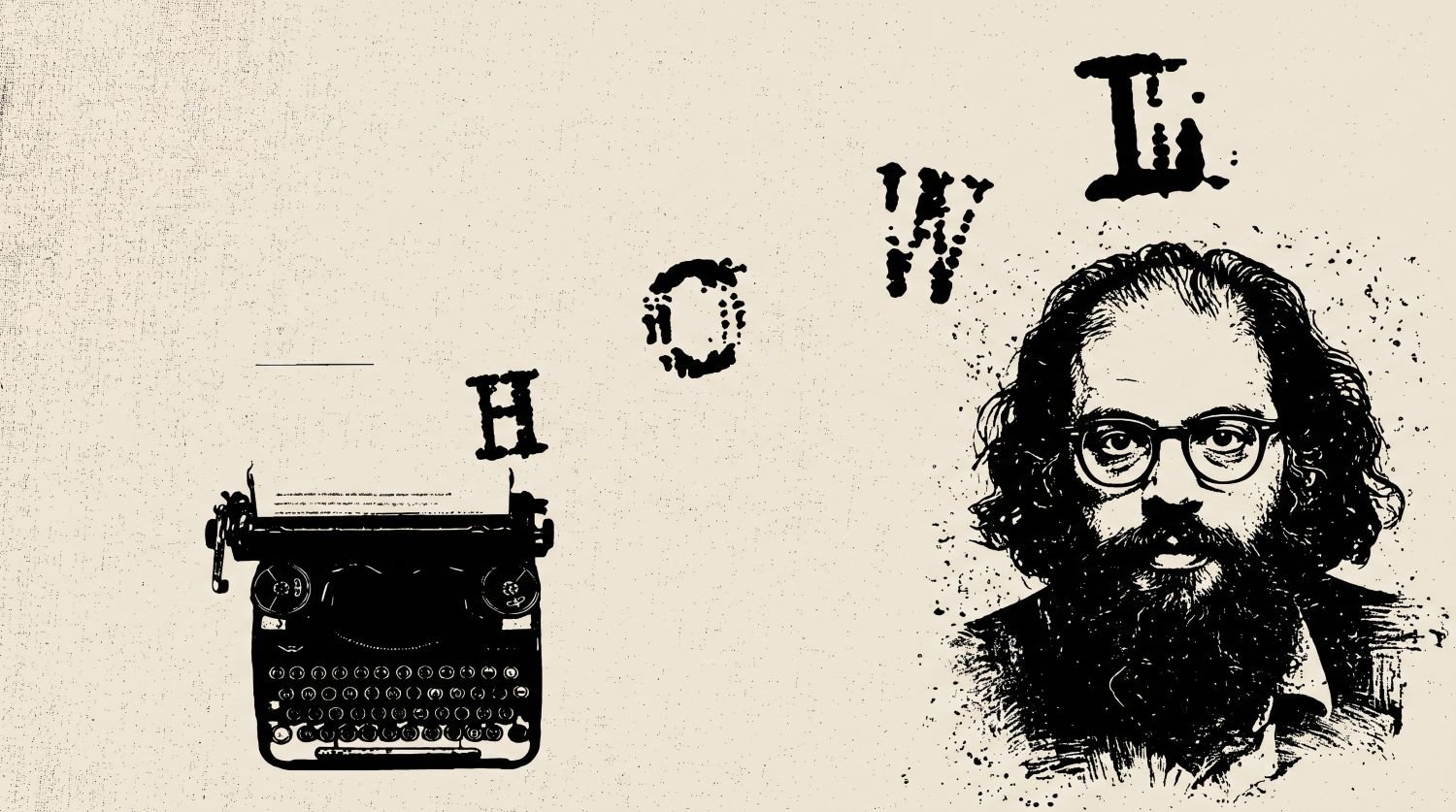
In 1956, Allen Ginsberg published Howl and Other Poems through City Lights Books in San Francisco, unleashing a poem that would become one of the defining works of the Beat Generation. Its long, breathless lines moved through sex, drugs, mental illness, capitalism, police violence, and the lives of people on the wrong side of respectable American society. The poem was obscene enough to provoke a legal battle, influential enough to become a landmark of post-war American literature, and restless enough to resist the idea that poetry should know its place.
Since then, Howl has crossed languages and borders, entering literary cultures with political histories and publishing traditions very different from those of the United States. Yet a poem’s arrival in another language does not necessarily mean that it has reached readers as a book or secured a place in the culture that receives it. Sometimes, the words survive while the story of their passage remains elusive.
This is the situation surrounding Kujë, the Albanian translation of Howl attributed to Ukë Zenel Buçpapaj. A substantial version of the poem is available online, and its translation has been the subject of academic analysis. Whether Kujë ever appeared as a conventionally published book, however, remains unclear. The document exists; the publication history is harder to find.
What happens between the moment someone translates a poem and the moment a literary culture can claim to have received it?
The digital document containing Buçpapaj’s translation is hosted on Scribd under the title Kuje Per Botim. The Albanian expression për botim means “for publication” or “intended for publication”. The document contains the translated poem, a dedication to Carl Solomon, and explanatory notes.
In 2016, Ilda Poshi and Ilirjana Kaceli published “Translating Literariness: Allen Ginsberg’s ‘Howl’ Vs Ukë Zenel Buçpapaj’s ‘Kujë’” in the European Journal of Language and Literature Studies. Their article examines the relationship between Ginsberg’s English text and Buçpapaj’s Albanian version, bringing the translation into scholarly discussion.
What happened beyond that remains difficult to establish. No independent publishing record has been located that identifies a publisher, publication year, or ISBN for Kujë. The digital document’s title suggests an intention to publish, but does not tell us whether a publisher was approached, an edition was planned, or copies were printed and circulated privately. Even the bibliographical reference associated with the scholarly discussion uses the word “print” while directing readers to the Scribd document, leaving the status of the text uncertain.
There is a temptation to fill the gap with explanations. Perhaps the rights were too expensive; perhaps a publisher considered the poem commercially unviable; perhaps its language and subject matter presented editorial difficulties. These are familiar obstacles in publishing, particularly for experimental poetry. None, however, has been established as the reason for Kujë’s uncertain status.
The title Kuje Per Botim remains an intriguing clue. To reconstruct the translation’s history, one would need to hear from Buçpapaj, consult those who studied the text, or locate correspondence connecting the manuscript to a publishing project.
For now, Kujë occupies an unusual position: it survives online and has been examined by scholars, yet its passage into the Albanian book market remains unverified. The poem has crossed the linguistic border. The history of its arrival is still waiting to be written.
The Italian history of Ginsberg’s work offers a useful point of comparison. Fernanda Pivano helped introduce the Beat poets to Italian readers, and her work on Ginsberg culminated in the publication of Jukebox all’idrogeno by Mondadori in 1965. The volume went on sale in January 1966, giving the poet an identifiable place in Italy’s publishing history.
An edition leaves material traces: a publisher, a date, a place in catalogues and, potentially, correspondence that reveals how the book came into being. These traces make it possible to investigate not only the translation itself but also the decisions and negotiations surrounding its publication. Where such records are missing or incomplete, a translator’s work may remain visible while the institutions and decisions surrounding it recede from view.
Translation is only one stage in the movement of literature. Rights must be obtained where required; manuscripts must find publishers; books must be produced, distributed, promoted, and made available to readers. A completed translation may never become a commercial edition, while a published book may circulate so narrowly that it leaves little trace in the cultural record.
Poetry adds another complication. Its commercial prospects are difficult to predict, particularly when a work is formally experimental, lengthy, or associated with a literary movement unfamiliar to much of its intended readership. These considerations make the economics of a possible edition of Kujë worth investigating, but they cannot tell us what actually happened to it.
The uncertainty exposes a gap between two ways of recognising a literary work. Scholarship can treat a translation as an established object of study without resolving how it was produced, published, or received. A text can therefore enter critical discussion before its place in the conventional history of books has been established.
Any account of literature in Albanian must contend with a history in which access to books was shaped by political institutions as well as editorial decisions. Under the regime of Enver Hoxha, the communist state exercised extensive control over cultural production. Publishing houses, literary criticism, translation, and the formation of the national canon operated within an ideological system that determined which ideas and works could be publicly represented.
Edlira Macaj’s study “Missing Poetry: A Historiography of Albanian Literature during the Communist Regime” examines how literary histories produced between 1945 and 1990 represented Albanian poetry. Her work draws attention to the ways literary value was defined and institutionalised, showing how national literary history was shaped by exclusions as well as celebrated works.
Enkelejda Malaj’s research on the Albanian publication of Thomas Hardy’s Tess of the d’Urbervilles offers a more specific example of the relationship between literature and political authority. Published by Naim Frashëri in 1973, the novel became part of a complicated history in which its circulation was affected by circumstances surrounding the people and institutions responsible for bringing it to readers.
Archival documents also show that access to certain categories of foreign literature could be restricted. A directive dated 30 April 1973, issued by the Ministry of Education and Culture to the Central Committee of the Labour Party, required designated foreign political and social literature to be kept in reserved cabinets and consulted under supervision. Access to books, in other words, could be administratively controlled rather than left entirely to readers and librarians.
These histories provide context for understanding the institutions through which literature circulated in communist Albania. They do not establish that Ginsberg’s Howl was banned in Albania or that Buçpapaj’s translation encountered political interference. Its uncertain publication history has not been linked to a decision by the communist authorities.
The broader question remains important, nonetheless. Literary circulation is shaped by the institutions that decide what gets published, preserved, classified, and placed before the public. In a system where literary production and access were subject to political scrutiny, those decisions could carry consequences extending well beyond an individual manuscript. The challenge is to understand the circumstances of Kujë on their own terms, rather than assuming that every uncertainty in Albanian publishing must lead back to censorship.
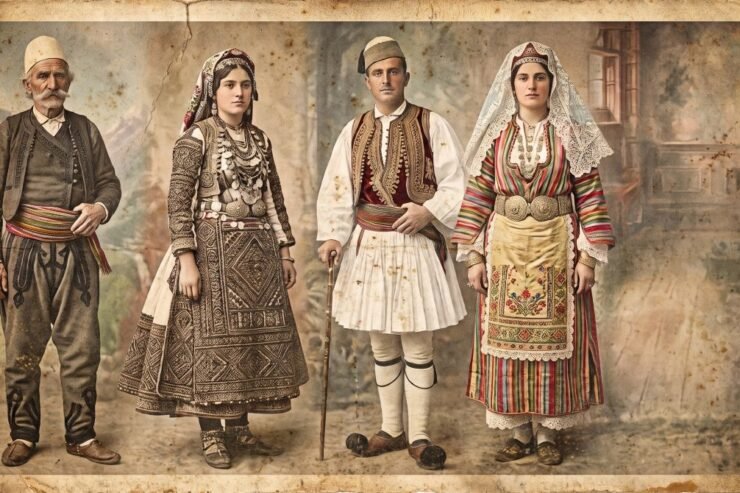
Ginsberg’s reception in Kosovo offers another perspective on what it means for a work to enter an Albanian-language literary culture. Kosovo developed within socialist Yugoslavia, under political and cultural conditions distinct from those of communist Albania. Its literary history belongs to the wider Albanian-speaking world, but cannot simply be treated as an extension of Albania’s.
In a 2023 article published by Telegrafi, “Gjithçka filloi nga një poezi …” (“Everything Began with a Poem…”), Flutura Oruqi recalls encountering Ginsberg’s poetry in Kosovo during the 1990s. Her account describes a small circle of readers exchanging literary material in the years preceding the Kosovo War, with the magazine MM, published in 1997, forming part of that history of discovery.
Oruqi’s testimony offers an intimate account of reading rather than evidence of a mass readership. Ginsberg’s poetry travelled through personal encounters, shared texts, and conversations among people discovering what literature could say. His treatment of sexuality and bodily experience offered possibilities of expression that mattered to those readers, regardless of the poem’s position in the publishing market.
A later publication provides a more tangible record of Ginsberg’s presence in Albanian translation. In 2023, a selection of his poems translated by Fadil Bajraj appeared under the title Unë jam një i burgosur i Allen Ginsbergut (I Am a Prisoner of Allen Ginsberg), published by Jakup Ceraja. The collection was presented in Pristina in connection with World Poetry Day.
Bajraj’s collection documents a further stage in the circulation of Ginsberg’s work in Albanian, but it does not resolve the history of Buçpapaj’s Kujë. The two belong to a larger story of literary transmission in which private reading, scholarly attention, and printed publication leave different kinds of traces.
A catalogue can establish that a volume was published. It cannot necessarily tell us how a poem moved between friends, why someone passed it to another reader, or what changed when its words were encountered in a particular historical moment. Those experiences also belong to the history of literature, even when they are harder to document.
The publication history of Kujë is uncertain, but the translation itself offers something more concrete to consider: the language Buçpapaj uses to recreate Ginsberg’s poem.
Poshi and Kaceli draw attention to the translator’s use of inventive compounds and compressed imagery. One revealing example is Ginsberg’s phrase “angelheaded hipsters”, rendered in Buçpapaj’s Albanian as “gazavajas, shijeparë, fytyrengjëj”. These striking formations do not simply replace English words with Albanian equivalents. They condense images and associations into new verbal shapes, making the act of translation a form of linguistic invention.
This matters because Howl depends on more than the ideas it expresses. Its energy comes from accumulation: images pile up, social categories collide, and the poem’s long lines gather speed through repetition and shifts in register. A translation that preserves only the information risks losing the movement that makes the poem feel like a howl.
Buçpapaj’s compounds suggest an attempt to meet Ginsberg on that terrain. Rather than smoothing the language into conventional phrasing, the translator experiments with the resources of Albanian. Such choices can make a translated poem feel unfamiliar in its own language, just as Ginsberg’s English unsettled the expectations of his first readers. The question is not whether every invention has an exact equivalent in the original, but what kind of poetic force it creates in the receiving language.
The article by Poshi and Kaceli provides a starting point for a fuller examination of these decisions. Their comparisons also raise questions about rhythm, syntax, and the balance between fidelity and creative freedom. Those questions deserve to be considered in the poem itself, rather than only in discussions of translation theory.
The dedication to Carl Solomon offers another way of approaching Ginsberg’s work. Ginsberg met Solomon at the New York State Psychiatric Institute, and Solomon became the dedicatee of Howl. Rockland State Hospital, repeatedly invoked in the poem’s third section, provides the setting for its refrain of solidarity. Solomon himself was not admitted to Rockland; the poem’s geography should not be mistaken for a literal account of his institutional history.
“I’m with you in Rockland” is one of the poem’s most enduring gestures. It places the speaker alongside people whose experiences have been interpreted through psychiatric diagnosis, social exclusion, and institutional authority. Ginsberg turns personal identification into collective protest, insisting that the lives of those regarded as outsiders belong within the field of poetic expression.
This is also what makes Howl a demanding work to translate. Its language moves between colloquial speech, autobiographical reference, political denunciation, sexual explicitness, and formal experimentation. The translator must carry these shifts into another language without flattening them into a single literary voice. Buçpapaj’s inventive compounds suggest one way of meeting that challenge: allowing Albanian to stretch, combine, and produce images of its own.
The poem’s journey does not end with the translator’s choices. Readers bring their own histories to the words, discovering in them forms of recognition or expression that may have been difficult to find elsewhere. These encounters are harder to document than a publication date, but they are part of what gives translated literature a life beyond the page.
The available record establishes that Buçpapaj translated Howl into Albanian, that a substantial digital version of Kujë survives, and that the translation was examined in academic scholarship by 2016. Whether it appeared in a conventionally distributed book edition remains uncertain.
Recovering that history means returning to the people and records closest to the translation: Buçpapaj, the authors of the 2016 study, and any publishing archives or private collections that might preserve its path from manuscript to reader. The title Kuje Per Botim and the ambiguous bibliographical reference to “print” are clues worth following, not conclusions in themselves.
The history of literary control in communist Albania offers important context, while accounts of Ginsberg’s reception in Kosovo reveal other forms of circulation. Neither resolves the question of Kujë. Rights negotiations, production costs, editorial decisions, and political pressures remain avenues for investigation rather than established explanations.
Literary histories tend to organise themselves around books that can be dated, catalogued, reviewed, and placed on shelves. Yet literature travels through less orderly channels, too: through manuscripts, private exchanges, scholarly encounters, and the work of translators whose efforts may outlast the records of their publication.
The history of Kujë remains incomplete. What survives is enough to establish that Ginsberg’s poem entered Albanian through Buçpapaj’s work, and enough to ask what happened next. The answer may lie in an archive, a private collection, or the memory of someone involved in its making.
Ginsberg’s poem returns to the declaration that runs through its third section: “I’m with you in Rockland.” The words have travelled across languages and historical circumstances, carried by people who found ways to make them speak elsewhere.
In Albanian, the poem has a name: Kujë. Its words are there. The story of how they reached us remains open.
(c) 2026 Wendy Fasko. Të gjitha të drejtat janë të autores. Imazhi ilustrues është realizuar me AI.
Discover more from Peizazhe të fjalës
Subscribe to get the latest posts sent to your email.